Home Blog Page 128

Masters Rowers Smith and Watson Continue Streak

STAFF REPORTS | COURTESY MAYRENE EARLE

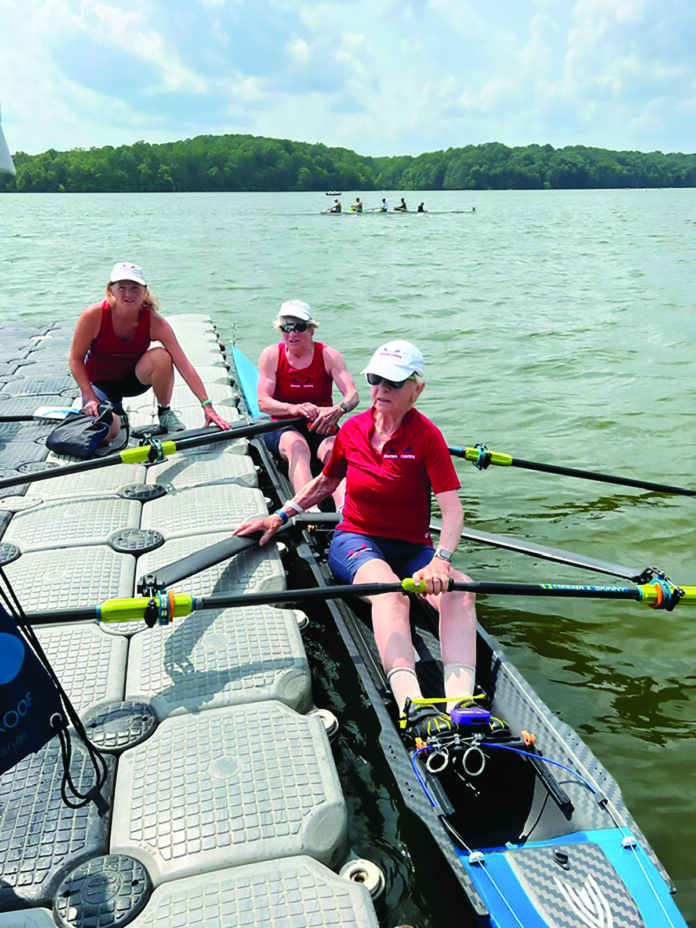
Rowing for MastersCoaching, Barbara Smith, 90, and Jeannie Watson, 79, continued their winning ways at this summer’s USRowing Masters National Championships on Eagle Creek in Indianapolis, Ind., winning the J age category in 6:26.02.

“Barb and Jeannie have been winning consistently ever since they were in category C,” said MastersCoaching founder Mayrene Earle. “It was really important to Barb and Jeannie to row together in this year’s nationals. They called it their swan song, but I’m not convinced they’re done yet.”

USRowing’s age classifications currently top out at K for 85 and older.

Sauer Adds Dare Shoop and Baynham-Williams to Coaching Staff

PHOTO AND STORY COURTESY UVA ATHLETICS

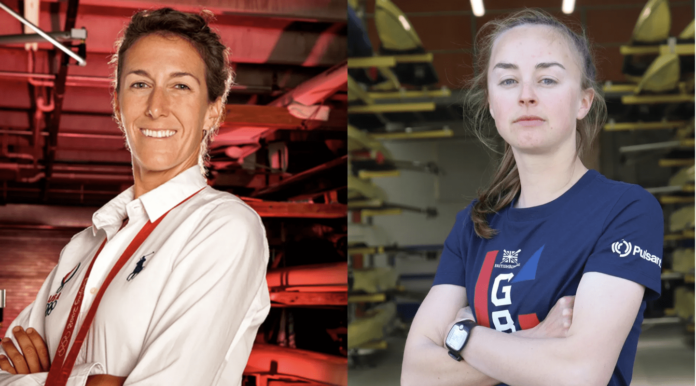
CHARLOTTESVILLE, Va. – Lindsay Dare Shoop and Morgan Baynham-Williams have been named assistant rowing coaches at the University of Virginia, head coach Kevin Sauer announced Wednesday (Aug. 23).

Shoop starred at UVA from 2002-04, earning back-to-back All-America honors in 2003-04. The three-time world champion helped the Cavaliers to three ACC championships and three top-6 finishes at the NCAA Championship. In addition, Shoop was a member of the USRowing National Team, earning a gold medal in the women’s eight at the 2008 Beijing Summer Olympics.

“It has taken me 20 years to find my way back,” Shoop said. “I feel like I am indeed exactly where I have been meant to be all along – paying forward the great gift I was given more than 20 years ago here at UVA.

“I am excited and honored to get to coach alongside some of the truly best coaches and people that I know while getting to inspire the possibility within this new generation of Hoos!”

Over the past decade, Shoop has been a youth rowing program director and has coached at every level from junior through elite. Shoop, who has twice been inducted into the National Rowing Hall of Fame, also leads camps, clinics, webinars and workshops. She has also published several articles on rowing and health and serves as a race commentator, having covered events for NBC Olympics, ESPN, ACC Network, NCAA and USRowing.

“I’ve obviously known Lindsay for a long time since finally talking her into giving rowing a try in her junior year at UVA,” Sauer said. “Following her illustrious career has been a pleasure and I’m very excited to welcome an Olympic gold medalist back to Grounds. I look forward to her helping us improve our process of high performance excellence.”

Baynham-Williams has coached crews to Henley Royal Regatta victories and World Cup medals for Leander Club and Great Britain, respectively. She is also a world-class coxswain, guiding crews to gold at the 2022 World Rowing Championships and silver at the European Championships. Baynham-Williams earned multiple medals at the U23 World Championship from 2013-15 and is a two-time Henley Royal Regatta winner (2021-22) and winner of The Women’s Boat Race for Oxford in 2016.

“I am honored and excited to have the opportunity to work with the remarkable team at the University of Virginia,” Baynham-Williams said. “The coaching staff boasts an inspiring level of expertise from which I am eager to learn and gain invaluable insights. I can’t wait to get to work in aiding the UVA women in their pursuit of building boat speed!”

“Knowing Morgan only a couple of months has not minimized my impressions of her incredible academic and athletic accomplishments,” Sauer said. “EVERY single person I talked to about her sang her praises and I am thrilled to welcome her to UVA!”

Anthony Delgreco Named Women’s Rowing Assistant Coach

PHOTO AND STORY COURTESY HOLY CROSS ATHLETICS

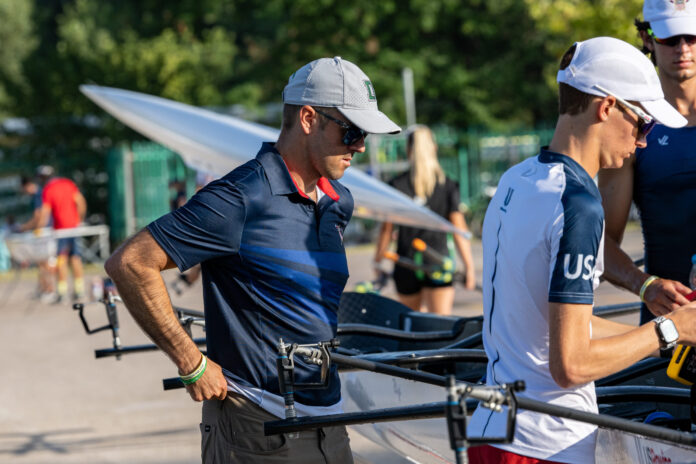
WORCESTER, Mass. – Holy Cross women’s rowing head coach Andrea Landry announced the addition of Anthony Delgreco as an assistant coach.

“I am pleased to announce Tony Delgreco has joined our women’s rowing staff here at Holy Cross! Tony brings with him a notable strength & conditioning background as well as proven results on the water, personally and professionally,” said Landry. “I am excited at the biomechanical approach he’ll bring to our program, helping us in our mission as coaches to promote efficient movement and produce fast boats.”

A Level 5 certified coach following his IRL fellowship, Delgreco most recently served as a volunteer assistant coach at Boston University. In the role, Delgreco worked primarily with the Open Weight Women’s 3v and 4v levels, focusing on improving technical proficiencies on the water.

“Tony recently completed a 10-month graduate-level fellowship, the Institute for Rowing Leadership (IRL) program, at CRI,” continued Landry. “I am confident his dedication to leadership education, proven strength and conditioning results, and competitive rowing background will make an immediate impact on our Fall 2023 season. We welcome Tony to the Crusader family. Go Cross Go!”

While at Boston University, Delgreco also worked as a lead personal trainer at Fitness Together, and a rowing and strength coach at Community Rowing, Inc. in Boston. At Community Rowing, Delgreco led adult recreational programs, youth learn-to-row programs, and created winter strength and conditioning courses.

Prior to his time in Massachusetts, Delgreco worked as a strength and conditioning coach at The Wise Decision in Detroit, Mich. and 2SP Sports Performance in Bloomfield, Mich., and interned with Barwis Methods in Plymouth, Mich. and Lewis Fitness and Performance in Erie, Penn.

A 2018 graduate of Mercyhurst University, Delgrecco competed for four years on the varsity lightweight team.

The 2023 World Rowing Championships are set to begin next week in Belgrade

PHOTO AND STORY COURTESY WORLD ROWING

The strongest field since the Tokyo Olympic and Paralympic Games will come together in Belgrade, Serbia next week for the 2023 World Rowing Championships, with qualification spots for the Paris 2024 Olympic and Paralympic Games on the line.

To be held from 3 to 10 September, the 2023 World Rowing Championships has attracted nearly 1000 athletes from 74 delegations.

Of the Olympic boat classes the men’s single sculls stands out with the largest number of entries, coming from 48 nations. This includes Olympic qualification favourites Denmark’s Sverri Nielsen, Greece’s Stefanos Ntouskos, New Zealand’s Tom Mackintosh and reigning World Champion Oliver Zeidler of Germany.

The women’s single sculls is well represented with 32 nations entered. The home crowd will be cheering for Jovana Arsic of Serbia who will be up against reigning World Champion Karolien Florijn of the Netherlands and reigning Olympic Champion, New Zealand’s Emma Twigg.

The men’s double sculls has 30 entries and all eyes will be on the Sinkovic Brothers of Croatia. The brothers are trying to qualify for their fourth Olympic Games in the boat class where they won an Olympic gold medal in 2016. Facing the Sinkovics will be the Tokyo silver medallists from the Netherlands, Stef Broenink and Melvin Twellaar, and recent World Cup winner from Italy, Matteo Sartori and Luca Rambaldi.

Competition will be fierce for para rowers too. The PR1 men’s single had 23 entries and sees the returns of Erik Horrie of Australia and Ben Pritchard of Great Britain. They will face Olympic and World Champion Roman Polianskyi of Ukraine and up-and-comer Giacomo Perini of Italy. The PR3 mixed double sculls, set to make its debut at the Paralympics next year, has 14 entries with five of the six A-Finalists from last year’s World Championships returning to the action.

Hoping to go for Olympics number six is 44-year-old Tonu Endrekson of Estonia. He is competing in the men’s quadruple sculls. Defying age and hoping to qualify for the Paralympic Games is Alejandro Magno Vera of Argentina, competing in the PR1 men’s single sculls at age 59.

Of the countries entered, Italy is sending the biggest team with entries in 24 boat classes. This is just ahead of the United States, entered in 22 boat classes. Host nation Serbia will be entered in five boat classes and hoping to qualify four boats for the Olympics in front of their home fans.

Racing will begin on Sunday, 3 September with heats and progress through to repechages, quarterfinals, semifinals, and A-Finals starting on Friday, 8 September. All races will be livestreamed on worldrowing.com (local restrictions apply).

Entries here
Olympic qualification information here
Paralympic qualification information here
The World Rowing media guide will be online (from 25/08/23): www.worldrowing.com/mediacentre

More Space at Mercer Lake

BY SOFIA SCEKIC | PHOTO COURTESY PNRA

The Princeton National Rowing Association (PNRA) is moving forward with plans to expand its facility on Mercer Lake in Mercer County, New Jersey. The facility is used by local high schoolers, juniors, and masters rowers and is the main training facility for Olympic rowers.

The 14,000-square-foot expansion will include a two-story building that wraps around the current building on three sides, said PNRA Executive Director Kristopher Grudt. The expansion aims to increase indoor training and meeting spaces and includes larger locker rooms, a climate-controlled repair bay, and a larger and safer parking area. 

PNRA’s junior team is sometimes as large as nearly 200 athletes, Grudt said, but the current training facility has the capacity for only 30 ergs. By expanding the indoor workout space to accommodate up to 80 ergs, junior athletes no longer will have to find alternate workout locations over the winter. 

Expanding the indoor erg space will benefit U.S. National Team athletes as well. “Being able to do their workout on and off the water at the same location and not having to travel to other places is something I think they’ll really appreciate,” Grudt said.

Josy Verdonkschot, USRowing’s chief high-performance officer, told Rowing News that the updated Mercer Lake facility will serve as one of three training centers for U.S. rowers as they prepare for the 2028 Olympics in Los Angeles. The other two are the California Rowing Club and an expanded facility at Nathan Benderson Park in Sarasota-Bradenton, Fla.

The boathouse at PNRA was built in 1997 jointly by the Peddie School and the Lawrenceville School. The U.S. National Team began training on Mercer Lake in the early 2000s, and it’s now USRowing’s main training center. PNRA realized years ago that it would need additional space to serve the increasing number of athletes seeking to train there.

Mercer County bought the land the training facility occupies several decades ago through New Jersey’s Green Acres program, which provides funding to counties and municipalities for preserving green space and providing sites for recreation. Although the program restricts what the property can be used for and what can be built, PNRA’s expansion plans have been approved by the county and align with the intent and purpose of the Green Acres program, Grudt said.

The expansion will take place in two stages, with the parking-area enlargement, featuring a 128-car lot and gravel overflow space, beginning later this year. Construction of the locker rooms and indoor-training and meeting facilities is expected to begin in early 2024 and last about 12 months.

The $7-million expansion will be covered by public funding and contributions from the local community, USRowing, and U.S. National Team supporters. Some money has been raised already, and Grudt hopes to have all sources of funding identified before construction begins.

“Everybody in the local rowing community is excited about it,” Grudt said. “We have developed a strong relationship with the county park here, and also with the schools and the community, and the expansion will give us an opportunity to continue to build on that.”

The Coaching Carousel

BY MADELINE DAVIS TULLY | PHOTO BY LISA WORTHY

Every year, the coaching carousel spins, though rarely more furiously than this past summer. In Division I open-weight women’s rowing, 11 female head coaches left their positions—most of their own accord to move on from collegiate coaching, and several others to take over other programs. 

Three titans of coaching retired—Liz O’Leary of Harvard-Radcliffe, Bebe Bryans of Wisconsin, and Lisa Glenn of Tennessee.

Marci Robles of George Washington, Nancy LaRocque of Dartmouth, and Madeline Davis Tully of Boston University (this writer) left their positions to pursue other professional and personal opportunities. 

Kim Cupini moved on from Southern Methodist University to take the helm at Tennessee. Jess Deitrick departed Colgate to start the new program at High Point University. The recently named head coach of Drexel, Asiya Mahmud, left to replace Kevin Gruber at Delaware.

After 20 seasons at the University of Central Florida, Becky Cramer resigned her position in April. In May, Michigan State University announced that it was parting ways with Kim Chavers after four years. Kim has moved on to take over the recently reinstated Nova Southeastern team.

Additionally, Madison Keaty, Stanford’s lightweight associate head coach, stepped down from her role in July to pursue new career opportunities and has yet to be replaced at the time of publication. 

The carousel spun well into August as many of these positions were filled by first-time head coaches. In Cambridge, Claire Ochal took the reins of the Harvard-Radcliffe program after five years at Syracuse serving as associate head coach and recruiting coordinator. She takes over a program that finished fifth in the Ivy League this past season.

“The Ivy League is the most competitive league in the country for our sport, and I’m excited to take on that challenge with the outstanding group of women on our squad,” Ochal told Rowing News as she prepared to move back to her native Massachusetts.

“Taking this step—more like giant leap—into being a head coach and a new mother is something I didn’t anticipate happening simultaneously. I’m reminding myself every day that we as coaches have to live the things we preach to our athletes: find comfort in the uncomfortable; don’t limit yourself; ask for help when you need it; surround yourself with like-minded folks; and, most of all, bring your best effort and best attitude to each day.”

Vicky Opitz became the head coach at her alma mater, Wisconsin, after serving as the assistant lightweight women’s coach there for two years. She is a four-time world champion and two-time Olympic spare. 

“I’m tremendously excited, honored, and looking forward to this upcoming season,” Opitz said. “It will be different from the past, but I’m looking forward to building on the foundation that Bebe built. The staff is excited and ready to hit the ground running.”

Similarly new as a collegiate head coach and accomplished as an elite rower, John Graves took over at Dartmouth after two years as assistant heavyweight men’s coach for the Big Green and eight appearances on the U.S. National Team. This is not his first foray into women’s collegiate rowing; he served as a volunteer coach at Michigan for the 2016-17 season and at Texas for their NCAA championship season in 2020-21. 

Another first-time head coach, Mara Allen, took the top spot at UCF. Mara spent the past eight years in Austin, where she helped guide Texas to two NCAA national championships and served as the associate head coach this past season. Allen won two national titles as an athlete at Cal before continuing on to the U.S. National Team, where she won the world championship in 2009. 

Asiya Mahmud made the move down I-95 to take over the program at Delaware after eight years at her alma mater, Drexel. Mahmud led the Dragons to seven second-place finishes in the Coastal Athletic Association Championship and a tie for first place in 2022. She also has experience coaching on the national team level, including serving as the boat coach for the world-champion junior women’s coxed four in 2022. Her move opened up the head-coach position at Drexel, which had not been filled at the time of publication.

Moving over from associate head coach at Georgetown, Paul Allbright took over the George Washington program. This is his first head-coaching position in the college ranks after serving in the role on the junior level at James Madison High School and Resilient Rowing Club. 
Chase Graham, most recently the associate head coach at Duke, now leads the SMU team. Though this is his first collegiate head-coaching position also, Graham led the junior women’s team at Saugatuck Rowing Club before joining the Blue Devils. 

Not all of the open positions were filled by first-time head coaches. Malcolm Doldron, who’s been at BU for 12 years, transitioned in July from head lightweight coach to director of women’s rowing. He served as the first and only coach of lightweight women’s rowing there, building the program from the ground up and eventually winning a total of 16 medals at the Intercollegiate Rowing Association National Championship Regatta, including three national titles in the lightweight women’s double. 

In addition to his duties at BU, Doldron coached a total of nine lightweight women’s crews representing the United States at the under-23 world championships from 2017 to 2019, where his teams brought home three medals. This move opened up the head-coach position for the BU lightweight women, which had not been filled at the time of publication. 

Stacey Rippetoe returned to Michigan State, where she was an assistant coach from 2000 to 2008, to become the program’s fourth head coach. Most recently, Rippetoe was an assistant coach and recruiting coordinator at the University of Rhode Island. Before that, Rippetoe was director of women’s rowing at BU for nine years, then an assistant at Wellesley. Rippetoe is excited about returning to East Lansing.

“The Big Ten is a fun place to be,” she said. “I’m really happy with the support for the athletes and what we can offer them.” 

She credited her coaching network with enabling her to take this step.

“The number-one thing for me is that I’m really, really grateful for the people that I worked for and with. It’s this network that enabled me to stay in coaching—the coaches who trusted me and advocated for me. I cannot express how grateful I am to each of them.”

Jim Lister, the newly named head coach at Colgate, also has a great deal of experience in collegiate women’s rowing, having coached at Duke and Syracuse before becoming the head coach for men’s and women’s rowing at Hamilton College in 2019. At Hamilton, Lister led the women to a second-place finish at the 2021 Division III NCAA National Championship, their best-ever finish at the regatta, and was named the Collegiate Rowing Coaches Association DIII Coach of the Year.

In one of the most surprising moves of the summer, Kim Cupini, who catapulted SMU to national prominence in her six years there, took over for Glenn at Tennessee. 

Under Cupini’s guidance, SMU won its first-ever conference title in 2021, followed by two more. The Mustangs made their first three NCAA appearances in 2021, ’22, and ’23, where they finished a program-best ninth place. Before that, Cupini led the University of San Diego, her alma mater, for 10 years, winning four West Coast Conference titles. 

Cupini spoke frankly to Rowing News about the coaching carousel, during which five of 11 female head coaches were replaced by men.

“From the bottom of my heart, I was sad to see a lot of women icons leaving the sport. At first, I just had a pit in my stomach. But if there’s a positive in this, it’s that I’m excited to see women with young families take on these roles, like Mara Allen at UCF and Claire Ochal at Harvard. 

“Personally, I want to help as best I can and encourage everyone to support all coaches in this endeavor, especially women.”


Gassing Up While On the Road

BY NANCY CLARK | PHOTO BY PETER SPURRIER

Many rowers, coaches, athletic trainers, and support crews—including parents, partners and siblings—spend a significant number of mealtimes on the road, traveling from one rowing event to the next, be they training sessions or regattas. Questionable sports meals and snacks are so readily available at gas stations and convenience stores that it can weaken one’s will to search elsewhere for more nutritious fare. 

Without a doubt, adhering to a decent sports diet becomes a challenge when healthy food options are scarce. Nevertheless, rowers who travel by car deserve to be fueled optimally so they can perform at their best. That means being creative—and  planning ahead. 

Bigger gas stations and those closer to a main highway or busy town tend to offer more nutrient-dense food than small-town gas stations where the shelves are stocked with candy bars  and bags of pork rinds. Hence, you (or the team’s driver) should  keep nutrition in mind when planning fuel stops. Getting gas sooner at a bigger station is better than later, if later will be in the middle of nowhere. 

Eating well on the road

A “well-balanced sports diet” includes foods from at least three, and ideally four, of these groups:

1. Fruits and vegetables for vitamins and minerals to boost your immune system and help keep your body healthy.

2. Grain-based foods to fuel your muscles and your brain.

3. Protein-rich foods to build and repair your muscles.

4. Calcium-rich foods, such as dairy, to enhance bone health and provide high-quality protein for muscles.

“Well-balanced” applies to your entire day’s eating and not just one meal or snack. Therefore, a good breakfast, lunch, and dinner can offset sub-optimal snacks. “Balance” also includes calorie balance. By reading the calorie information on food labels, you can determine the portion size that fits your calorie budget to avoid undesired weight loss or gain. Approximate targets: at least 600 to 800 calories per meal for female rowers, and 800 to 1,000 calories per meal for males. 

The above chart of some typical gas-station snacks organizes the foods according to nutrient profile. Using this template, you can manage to pick a somewhat balanced, halfway decent sports diet when you’re on the road (or at a vending machine). Remember: at least three of the four kinds of food for meals, and two kinds for snacks 

** If you are lactose intolerant, cheddar cheese is a lactose-free dairy option, but you’ll probably want to travel with Lactaid pills. Non-dairy calcium-rich foods such as soy milk or calcium-fortified orange juice can be harder to find on the road. Calcium-fortified almond milk might be available, but besides offering calcium, it’s a nutrient-poor choice.

Turning convenience foods into a balanced sports diet

When you’re at home, a well-balanced diet that includes all four food groups might look like this:

•Granola + milk + banana + hard-boiled eggs

•Whole wheat bread + turkey + cheese + lettuce/tomato and an apple

•Brown rice + chicken + broccoli + yogurt (for dessert)

When you’re eating from the gas station/vending machine, your balanced diet might resemble these tasty meals:

•Orange juice + popcorn + protein bar + yogurt

•Salsa + corn chips + almonds + milk

•Banana + peanuts + Wheat Thins + cheese sticks

Fresh fruits and vegetables can be the hardest foods to find when you’re on the road. You will not suffer from malnutrition if your traveling diet is low in fruits and veggies for a week or so because your body stores their vitamins in the liver. A healthy person’s liver stores enough vitamin C to last for at least three weeks. But you’ll want to restock your liver’s diminished supply when you return home. That means enjoying extra fruit smoothies, colorful salads, and generous portions of fresh fruits and veggies whenever you get the opportunity to do so. 

Traveling with a cooler 

A wise alternative to “dining” at gas stations is to travel with a cooler (and refreezable ice packs). Stock the cooler with sandwiches (PB&J, ham & cheese), water, 100-percent orange juice, chocolate milk boxes, and other wholesome sports foods. A pre-trip food-shopping spree at a BJ’s, Costco, or large supermarket can save a team a lot of money. Some suggestions:

Perishable items: Oranges, orange juice, baby carrots, peppers (eat them like apples); yogurt, sliced cheese, milk chugs; ham, hard-boiled eggs, hummus; tortillas, wraps, mini-bagels.

Non-perishable items: tuna in pop-top cans, small jar of peanut butter, almonds; granola bars, graham crackers, Fig Newtons, dried fruit, V8 juice.

Note: Your teammates may come begging for food from your personal cooler, so pack extra or, better yet, encourage them to pack their own food!   

The Bottom Line

Performance begins with good nutrition. If you make the effort to travel to rowing events, you want to make the effort to eat a winning sports diet. No amount of training will override a poorly fueled athlete.   

Better Boat Run

BY MARLENE ROYLE | PHOTO BY ED MORAN

Improving the distance between your puddles represents boat speed and better boat run. Single-stroke work helps you train boat run to develop stroke power, and then you can build the stroke pattern gradually to higher rates. 

For a single sculler, a head race is about 600 strokes. This season, if you increase your distance per stroke by five centimeters (or about two inches), that would take you 30 meters farther at the same stroke rate—or about 3.5 boat lengths. 

In an eight, aim to push all the puddles well beyond the stern pair. Practice single-stroke rowing with a pause at one-quarter slide to focus on improving boat run. Drive firmly, then release the blade cleanly from the water. Come out of the bow fluidly but not rushed. Carry the momentum you’ve built during the drive as you swing out of bow. Accelerate to the perpendicular point of the handle on the recovery when your knees rise slightly.

Pause for sets of 10 strokes and focus on increasing your meters per stroke. Hold the pause until the shell slows down significantly and maintain your balance with blades off the water. Be dynamic about drawing the hull under you, yet without rushing. Encourage the hull to keep running and focus on precise entry timing. 

When your knees reach their peak, the blade should enter the water. Advance the drill by pausing at half-slide for sets of 10 strokes, then row sets of 10 strokes focusing on the distance per stroke with varied ratings to compare improvements at set ratings over time.