Home Blog Page 110

Making the Most of An ‘Unofficial’ Visit

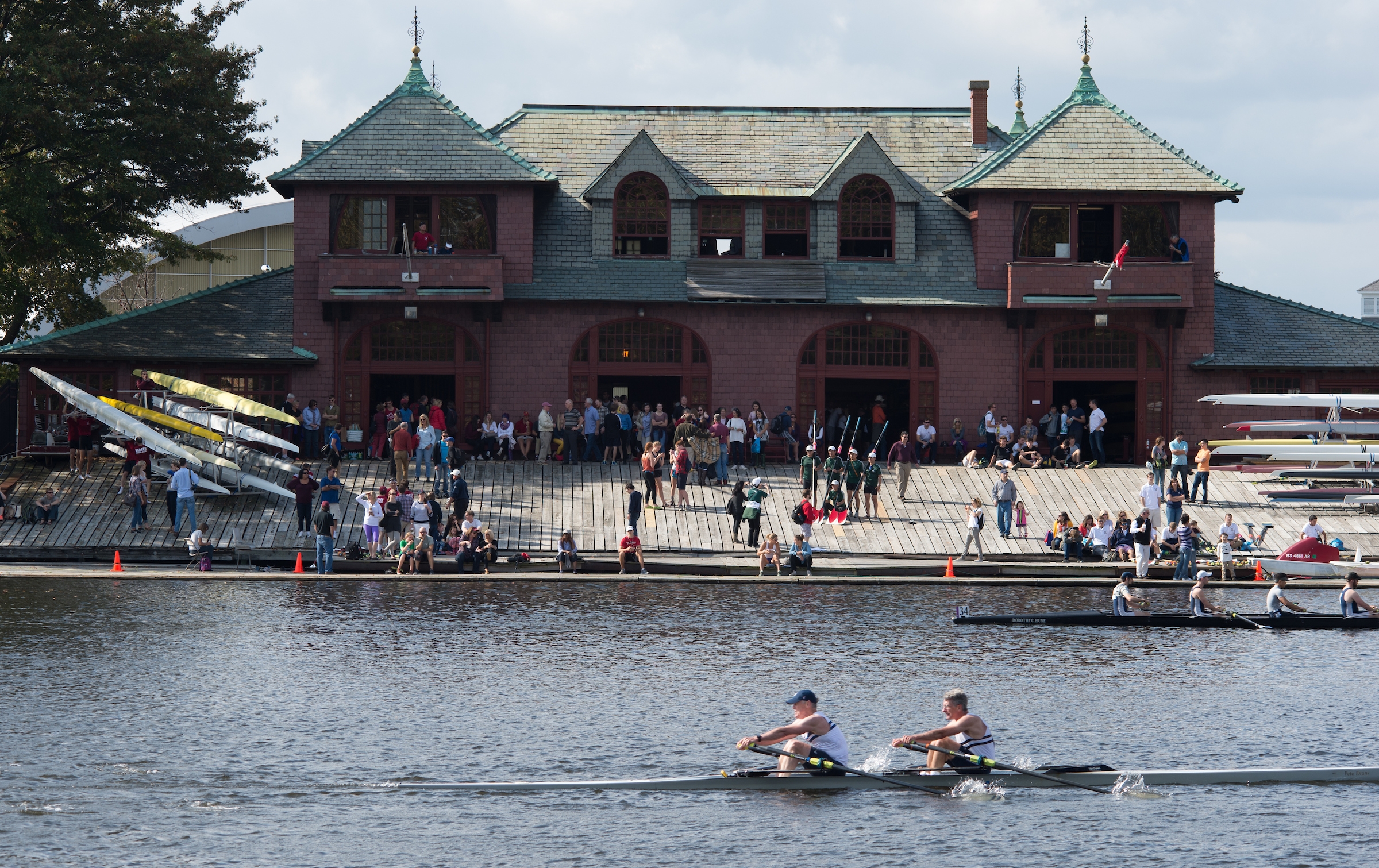
Cambridge. Mass, General view of the, Newell Boathouse. Home the Harvard University Men's Boathouse.2014 Head of the Charles Regatta. Charles River. Boston. 11:48:39 Saturday 18/10/2014 [Mandatory Credit; Peter Spurrier/Intersport-images] 2014. HOCR, 50 Years, anniversary

BY BILL MANNING
PHOTO BY ED MORAN

An “unofficial visit” is the same college visit made by your non-rowing peers. What sets it apart is your interest in college rowing, meeting the coaches, and seeing the rowing facilities. 

It’s called “unofficial” because the college does not pay any of your expenses, as they can for an official visit, and also because it can occur before your senior year. Visits are two-way streets; you get to learn about the rowing program, and the coaches get to learn about you.

It’s often best to wait until after your sophomore year before meeting coaches as a college prospect. To schedule an unofficial visit, consult the college’s admissions-office website. If possible, visit when classes are in session. Once you have some dates in mind, email the coaches. Email is better than calling, and it should come from you, not your parents.

Expect coaches to want to know about you before the visit. Supply your current unofficial academic transcript, any PSAT/SAT/ACT scores, and the basics of your rowing background (school or club, height, weight, erg times, and significant race results). Send this ahead of time rather than bringing it with you. Go online and submit the questionnaire even if you can’t complete every question. You can always update it later.

Know exactly where you are meeting and arrive on time—not early or late. Err on the side of formality when you address the coaches. They will probably have a routine for how they conduct visits. Follow their lead. They may wish to sit down and chat with you, give you a tour of the boathouse, or have you ride along in the launch for practice. 

Pay attention, listen, and try to get a feel for the place. Always be asking yourself, “What makes this place different?” Show that you are interested genuinely in the rowing program and ask informed, specific questions.

First-Ever Conference for Women Rowing Coaches

More than 50 women rowing coaches eager to improve their leadership skills and advance their careers are expected to attend the first-ever Womens Coaching Conference (WCC), Nov. 30 to Dec. 2, in Boston, Massachusetts, USA. 

There is a real need among female rowing coaches for community and professional development,” said Madeline Davis Tully, founder of the event and former coach of women’s rowing at Stanford University, The Ohio State University, and Boston University.

“This conference is a very real, very practical way to get and keep women in coaching, making the sport better for everyone.”

The purpose of the WCC is to educate, connect, and inspire emerging and established coaches from every level of the sport – collegiate, junior, masters, and club—and to create a profession that is better-equipped, more inclusive, and more sustainable.

Last summer, 11 female head coaches left their positions in Division I rowing, and nearly half those positions were filled by men. Today, less than a third of college head rowing coaches are women.

Its clear that the time is now for a conference like this,” Davis Tully said.

Coaches are traveling from as far as California and Florida to learn from expert speakers about such topics as leadership, bravery, and advocating for yourself and your team. 

The presenters and their topics include:

Holly Austin
Head Coach and Founder, Ready Set Row
Leading with Authenticity and Building Connection: The Brave Rowing Coach

Dr. Sharon Beverly, Ph.D.
Founder and President, Beverly and Associates
Mastering the Process to Land Your Next Job

Liz Dennison
Associate Athletic Director and Senior Woman Administrator, Hobart and William Smith Colleges
Positioning Your Program for Success: How to Effectively Advocate for Yourself and Your Team

Miranda Paris Holder, PCC
Founder and Principal Coach, Holder Leadership
The Inner Game of Leadership

Crista Samaras
CEO and Founder, Brave Enterprises
Bravery

Thirteen coaches will attend the conference without charge through generous scholarships from Concept2, Head of the Hooch Regatta, Shimano, and USRowing. Other conference sponsors are the Collegiate Rowing Coaches Association, Concept2, Hydrow, Ready Set Row, and Rowing News.

The conference will take place at Hydrow corporate headquarters, 10 Summer St., Fifth Floor, in the Downtown Crossing retail and pedestrian area of Boston. Childcare is available on site for conference attendees.

The Women’s Coaching Conference will return to Boston next year, and a similar event is planned for the West Coast as well as a conference for both male and female coaches at a location yet to be determined.

For more information, visit the WCC website at https://wccconference.com and on Instagram @wccconference.

Minding a Rower’s ‘P’s’

BY BILL MANNING
PHOTO BY LISA WORTHY

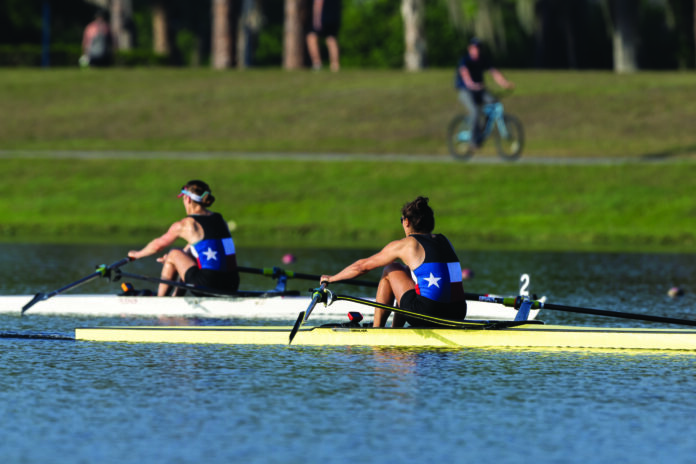
For most coaches, the challenge when teaching rowers is where to begin. Troubleshooting a rower’s stroke helps detect what’s actually going on and what can be improved. Though the stroke cycle is continuous, focusing on its elements generally makes the whole better. A handy hack for coaching better is looking at the stroke with “the P’s” in mind.

Posture. “Posture proceeds performance,” former Boston University men’s rowing coach Rodney Pratt preached. Rowers should sit on their seats square and level, weight distributed evenly left to right, neither too far forward nor too far back. Their hips should be elevated (lift the belly button) so their pelvic bones—the sit bones—are the primary point of contact. 

Rowers should be able to sit in this position comfortably for an extended period. If not, ask them to put their hands on the gunwales, lift off the seat gently, and sit back down. This will help center their weight on the seat.

Next, check that the bottom of their feet connect to the foot stretchers. Engaging with the foot stretchers balances the boat and creates the potential for power.

Rowers should keep the oar collar(s) firm against the oarlock(s) through the entire stroke cycle. This light lateral pressure keeps the lever engaged against the fulcrum of the pin, thus balancing the boat and making the drive more effective.

Preparation. Everything in the stroke cycle depends on what’s done before. The recovery begins with rowers separating the handle from the body and forming a rectangle—outstretched arms making up two sides, shoulders and handle the other two. Look for the pivot from the hips, the pelvic tilt, being low in the torso and early on the slide. Too often, body weight doesn’t shift forward because rowers are reaching from their shoulders and rounding the upper back. After pivoting, the body is positioned and remains patient as the knees rise. The recovery is sequential but overlapping. It should position rowers so they’re poised to reverse direction. Pause drills reinforce proper preparation.

Pushing with a firmly braced body initiates the change of direction. While pressure on the foot stretchers and handles should be equal, emphasize pushing. The tendency to pull rarely needs reinforcing, but the need to push always does. Just like the recovery, the drive should be sequential but overlapping. This is achieved by the trunk’s prying open against the continued push of the legs. The pertinent mantra: “Push…push pry…push to prevail.”  

Rowing with greater resistance—meaning a heavier boat—helps teach prying against the leg push. In a single, hold the oars closer to the collars, and in sweep, row inside-arm-only to achieve this effect. Rowing a team boat with some sitting out works, too.

Pulling seemingly comes next, but too often pulling replaces pushing rather than adding to it. While the arms draw the handle toward the body, this depends on continued pressure being applied through the shoes (every action has an equal and opposite reaction). If the finish is weak, the problem almost always is insufficient pressure on the feet rather than too little on the front of the handle. Maintain posture and keep pressing. 

Power properly applied cures most problems. Rowing powerfully with the feet on top of the shoes rights many wrongs.  “More power!” is often the best coaching advice one can give.

Project Minerva: British Rowing’s Pioneering Initiative Tailors Training for Elite Female Rowers Eyeing World and Olympic Gold

BY MADELINE DAVIS TULLY

British Rowing’s Project Minerva, named for the ancient Roman goddess of wisdom and strategic war, was created a year ago to optimize the health and performance of elite female rowers in the UK. By bringing together sports scientists, university researchers, and elite athletes, this program, the first of its kind in the world, tracks a variety of typical training markers, such as heart rate, in relation to hormones and menstrual cycles to create personalized training plans, with the aim of World and Olympics gold medals.

Read more about Project Minerva from the BBC.

Watch this video for highlights of the program and interviews with participants.

Training for Mental Fitness

BY TAYLOR BROWN
PHOTO BY ED MORAN

We all know the mind is important for peak performance. When athletes and coaches are asked what proportion of athletic endeavor and success is mental, their answers range from 50 percent to 90 percent.

Hardly surprising. Anyone who has ever competed in a sport knows that the contest is won or lost in the six inches between your ears. What’s revealing, however, is the follow-up question: “What percentage of your training do you dedicate to the mind?” The question usually confounds people because, while they deem mental performance important, most realize that the time they spend training the mind is almost zero.

Clinical psychologists Keith Kaufman, Tim Pineau, and Carol Glass call this  “the mental-training paradox.” In their book, Mindful Sport Performance Enhancement, they quote Bruce Beall, a rowing coach and Olympian: “Coaches like to tell athletes that sport is 95 percent mental but do not seem to know how to train the mind.”

Many coaches and athletes believe that training the body will train the mind by default. If you keep training the body, the mind eventually will catch on, right? Wrong.

Chad McGehee, director of meditation training at University of Wisconsin Athletics, works with the women’s rowing team and likens the relationship between mental and physical training to racing in an eight,


“You have eight spots in the boat, and five of those people are training their butts off, working hard. Then those other three people just show up on race day without really training,” McGehee explained. “They’ll figure out some stuff and after a while they’ll get a little bit better, but they’ll have a ton of bad habits that are going to get in the way. This is like training the body without training the mind.”

One reason training the mind is challenging is that we humans are not fond of deferred gratification. When we put in effort, we want to see results immediately. “Measuring the impact of mental training can be hard,” McGehee said. “It’s challenging to see  those fractional advantages that add up over time. Motivation can decrease if athletes don’t see benefits in their performance early.”

The erg screen shows how hard you pulled and your seat-racing rank vis-a-vis others, but there’s no objective measure of your mental performance. When it comes to assessing progress in that realm, you’re on your own. McGehee encourages athletes to view their minds and bodies as laboratories for determining how to make performance gains over time. His advice for young athletes: “If we don’t train the mind, then we’re just hoping that it all works out, and hope is not a strategy.” 

A Rower’s Journey

Sometimes it’s difficult to know where to start. That’s why we look to those who have done it before.

When Michelle Sechser was a 15-year-old novice rower at Capital Crew, she knew where to go for help—Santa Claus. “I was really stoked on rowing and I thought, ‘I’ll ask for a rowing book. This will be great!’”

The Tokyo Olympian and eight-time U.S. national-team member asked Santa for a book about mental performance, and after she read it, her perspective on training changed forever. “That was my first realization that training my mind is as important as training my body and my rowing stroke.”

Over the years, Sechser, in weathering the ups and downs of competition, has had to draw on all she’s learned. “This year, I had to revisit all of the seasons when I managed my headspace well—and also when I was self-destructive—in order to put the most successful season together.”

Over the course of her career, Sechser has come to believe strongly that mental and physical training are inseparable. Every seasoned racer knows that there are pivotal points during races that are extremely hard physically and that demand you respond. Coming into the third 500, you sit up, breathe, and keep the catch sharp because this is when fatigue sets in. 

Likewise, there are points in a race that are extremely hard mentally, and Sechser has learned how to deal with those, too. Four seats down with 750 meters to go, for instance, is a moment when doubt can creep in. “I want to be able to rely on my mind being strong and reliable the same way I rely on my core strength and posture.” Sechser said. “They’re parallel.”

Sechser refers to these pivotal points as “sliding-door moments”—times in a race when a momentary response has a huge effect on the outcome. Perhaps you’re down a length early. You can respond by acknowledging that fact and doing something to change it. 

“Sit up, blades in, strong push, breathe, sit up, blades in, strong push, breathe.” Sechser said, demonstrating how she responds at such times. 

Occasionally, negative thinking has led Sechser down a psychic rabbit hole, she admits. “How did you get down like this? You’ve lost focus! Why aren’t you focused? I need to get my splits back.”

Result: You jack up the rate a couple beats, get tense in the shoulders, and wind up rowing terribly, still a length down. Perhaps you slip into a funk, which compounds the frustration. 

At the whim of your thoughts, you’re no longer calling the shots. The origin of both scenarios is how you responded during the sliding-door moment—the moment when mental training is important. 

Visualizing the Victory

How does Sechser suggest athletes train their minds? Visualization.

“Two-fifty by two-fifty, here’s my focus. I’m picturing myself rowing. I’m picturing myself executing at the highest level, the way I want to be,” Sechser said. “I see myself making the move, walking through the field. I see myself getting my bow in front because I’m holding good posture. I’m driving my legs hard. I’m staying strong. I’m pushing deep to the absolute bottom of the well. And then for me, most importantly, visualizing the victory. I want to feel the emotion I would experience, and what that would mean to me.”

Visualization can create confidence before the race and also halt negative thoughts that can disrupt your performance during it. “I visualize a stop sign to break negative thought patterns and then replace them with positive thoughts or something to bring my mind back to the moment,” Sechser said.

In talking to herself, Sechser rarely uses the first-person I. Instead, she addresses herself as you and we, as if coaching someone else or a group. “Yeah, you’re strong. Good, good strokes. Good rhythm. Keep this up. Repeat. All right. Dig in. We’re feeling the burn. We’re going to push hard. You can do this. You’re confident. Sit tall and just keep this flowing.”

Research suggests that third-person or distanced self-talk fosters more effective self-control because it allows people to regard the self the way they regard others, thus providing the psychological distance needed to facilitate self-regulation. This type of self-talk serves to ground you squarely in the moment. Every time Sechser launches, she tries to connect with what she’s experiencing. She takes a “mindfulness minute” to center herself by focusing on what she can see, hear, touch. This keeps her from getting sucked into negativity and protects against fear. If you ground yourself squarely in the present, fear has no power. 


Staying in the Process

Matt Brown, a former Yale rower, Olympic trials champion, and record holder for fastest Atlantic crossing in a four-man rowboat, has experienced many adventures in mental endurance. His secret for getting through: Fall in love with the process. 

“At one point during the Atlantic race, I was rowing with every ounce of energy I had,” Brown recalled  “Then one of my teammates comes out of the cabin and tells me that we have gone a thousand meters in the opposite direction. We were being pushed backward, farther away from the world record.” 

The way Brown and his teammates dealt with such instances: Focus on the small wins in the journey, not the ultimate goal.


“If you go on a journey like that and the only thing you’re thinking is whether there’s a trophy for you at the finish line, you’re probably going to be disappointed,” Brown said. “It’s all about the process. It’s not about the big moment of competitive triumph but the little mundane things you do every day,” Brown said.  “Do you love doing those things?”

Ask and You Shall Receive?

Devising a mental-training strategy can seem daunting, especially when there’s little support from above.

“Colleges spend all this money for the best equipment, for travel to races and European recruits,” Sechser said. “But the ratio of mental training to physical training is 50/50. What a missed opportunity for getting the most out of your athletes.”

Wisconsin’s McGehee says one of the biggest difficulties for athletes interested in developing mental skills is that they don’t know how. 

“The access to a sports psychologist or mental-performance coach is important, but beyond access, is the how?” McGehee said.  “There’s a million YouTube videos and books and all sorts of resources for strength and conditioning and good scientific research on impactful ways to train the body, yet we’re not at that same place with training the mind.” 

Another challenge is the stigma surrounding mental health. People still view attention to mental issues as “something you need to do only when something is wrong, when there’s a pathology,” said McGehee. “There’s lots of stigma in high-performance environments with regard to mental performance.”

At some point, voices such as those of Sechser, Brown, and McGehee will be heard and a shift will occur, bringing new understanding of what it means to train and compete and illuminating just how important the mind really is.


Canadian National Rowing Team Alumni Shine at 2023 Head of the Charles Regatta, Pay Tribute to Late Teammate Jon Beare

PHOTO AND STORY COURTESY ROWING CANADA AVIRON

Not only did the Rowing Canada Aviron (RCA) alumni excel in their respective races, but the gathering also served as a poignant occasion for sharing stories, and memories, and paying tribute to the late Jon Beare, a Beijing bronze medallist and teammate to many, who sadly passed away in October 2023.

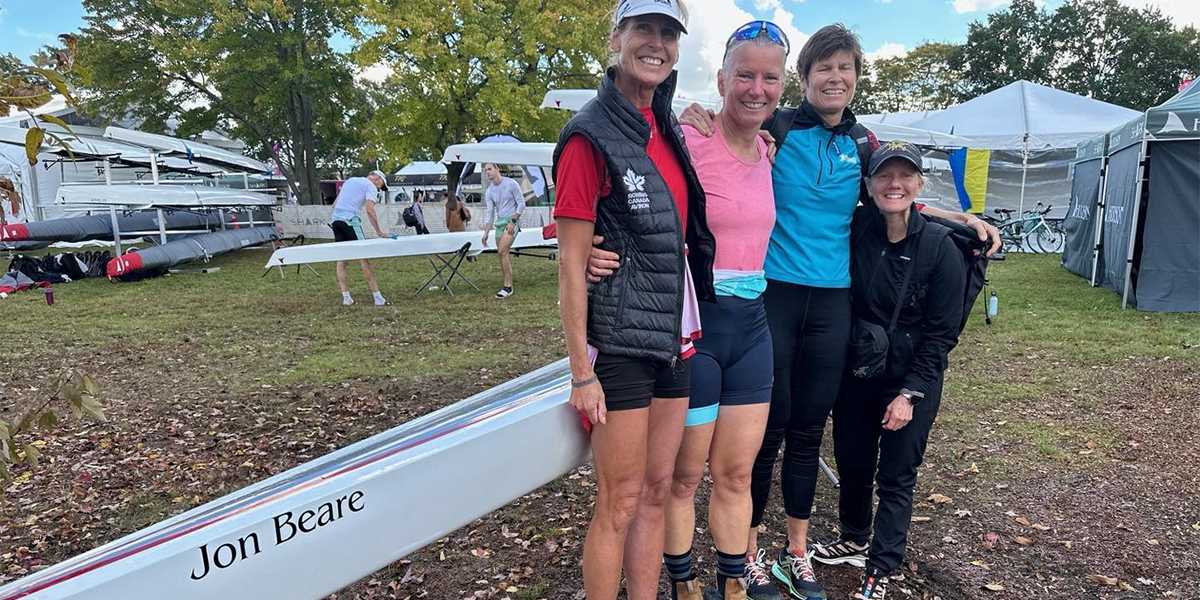
Under the RCA Alumni Association banner, the Women’s Coxed Four in the Senior Masters category secured a gold medal with a stellar performance. The quartet of Jen WalingaIsolda PenneyCheri Moore, and Julie Platt, coxed by Deb Lloyd, not only clinched victory but also set a new course record, outpacing their competitors by a remarkable 16 seconds, finishing in a time of 18:29.

Members of the victorious Women’s Coxed Four crew. (Jennifer Walinga/Instagram)

Additionally, other RCA Alumni, racing as Endeavour RC in the same race, placed 8th in a time of 20:14. This coxed four under the leadership of alumna Lesleh Anderson, featured Tina ClarkeAngela SchneiderJane Stamp (nee Tregunno), along with Molly Baker (USA Alumni) and coxed by Freya Pollock.

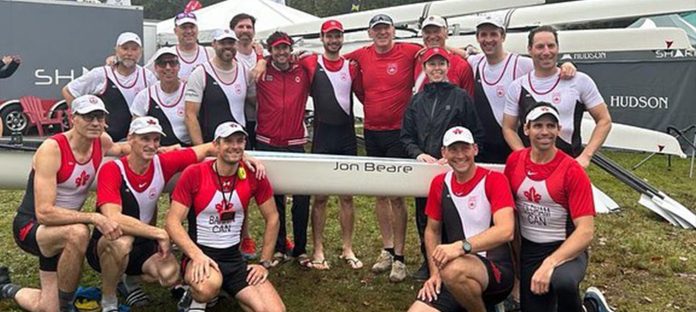
On the men’s side, there were two entries in the Sr. Masters 8+ (50+) race. The “Red” crew consisting of Julien BahainDave CalderAndrew HoskinsDarren BarberMike ForgeronPhil MoncktonAubrey OldhamHenry Hering and coxed by Sara Pape started in 6th place and finished 3rd overall in a time of 15:32.

The second crew, the “White” boat, coxed by Mark Laidlaw included Phil GrahamChris JarvisJim RelleChristian DubrowskiPaul HardyRichard UpenieksPeter McClelland and Todd Keesey. The crew started in the 18th spot and were able to claw their way to a very respectable 9th place overall in a time of 16:18.

In a touching tribute to their late teammate Jon Beare, both men’s eights gathered for a team photo around one of the three Hudson boats named in his honour. Men’s and women’s alumni crews along with international competitors and friends from GBR, NZ, USA, and AUS, concluded the regatta with a heartfelt toast in his memory, embodying the spirit of unity that defines the international rowing community.

A toast to the memory of Jon Beare. (Aubrey Oldham/Instagram)
Following the regatta, Paul Hardy, an elite provincial level rower in his junior years, shared an inspiring letter with the National Team Alumni Association, reflecting on the transformative journey that brought him, fellow junior elite rower Richard Upenieks, and Los Angeles 1984 Olympian Jim Relle back to the Charles River. Their story, born from a few emails reconnecting old friends, underscored the enduring bond of rowing and the joy of competing together once again.

As the echoes of the 2023 Head of the Charles Regatta linger, the RCA Alumni express their enthusiasm for future competitions. The experience Paul Hardy shared encapsulates the sentiment of the alumni association, who invite fellow rowing enthusiasts to join the ranks and start training not only for next year’s HOCR but for other regattas across the nation. The prospect of racing again with your Canadian National Teammates is a great opportunity to rekindle the passion for rowing that unites us all.


Are you an Rowing Canada Aviron Alum?

To stay in touch and receive updates on alumni events and news, we encourage you to register as an Rowing Canada Aviron Alumni member here. If you have any questions or would like to learn more about opportunities to get involved as an RCA Alum, please email alumni@rowingcanada.org

John Wetzstein Returns Home to Lead Saskatchewan Rowing’s High Performance Program

PHOTO AND STORY COURTESY ROWING CANADA AVIRON

In a significant development for the Saskatchewan rowing community, John Wetzstein, a distinguished national team coach with Rowing Canada Aviron (RCA), has accepted the role of Sport Technical Director and High Performance Coach with the Saskatchewan Rowing Association. This marks a homecoming for Wetzstein, who with his elite coaching knowledge, is set to play a crucial role in shaping the future of rowing in his home province.

Amanda Billesberger, President of the Saskatchewan Rowing Association, expressed her enthusiasm for John’s appointment.

“We are pleased to welcome John as our new Sport Technical Director and High Performance Coach. John’s wealth of knowledge and the expertise that he will share with our coaches and rowers is outstanding,” Billesberger said. “His return to Saskatchewan is an exciting homecoming for John and SaskRowing. We look forward to the continued growth of our program under John’s leadership.”

Wetzstein has been involved with the Canadian National Team program for the past decade, including leading the crew that captured Canada’s first Paralympic rowing medal at the Rio 2016 Games and most recently as the coach of the Men’s Sculling program.

“I have mixed feelings about leaving my current role. There are colleagues and athletes that I have enjoyed working with so very much and there is sadness around that. But it is also true that in a real way I’m not actually leaving Rowing Canada Aviron. I’ll be working to help athletes and coaches in Saskatchewan do more, be better, reach levels of excellence that will benefit the Canadian rowing community,” Wetzstein shared. “My friends and colleagues in the National Team program are still my friends and colleagues and I’m looking forward to being back in Saskatchewan and to bring what I’ve learned with me to grow the sport and develop both athletes and coaches alike.”

RCA High Performance Director Adam Parfitt thanked John for his passion and dedication over the past years and is looking forward to seeing the results John will have with the emerging Saskatchewan rowers.

“On behalf of RCA and our National Team coaches and athletes, I thank John for his hard work, passion and determination to help our nation’s elite rowers over the past decade,” Parfitt shared. “I have no doubt that John’s wealth of experience and passion for helping athletes will inspire and elevate the rowing community in Saskatchewan. We are excited to see the positive influence he will have on the development of both coaches and athletes as he returns to his home province. We wish him all the best.”

Rowing Canada Aviron announces departure of coach Carol Love

PHOTO AND STORY COURTESY ROWING CANADA AVIRON

After an outstanding career spanning over three decades, Carol Love announces her departure from Rowing Canada Aviron (RCA).

Her departure brings an end to a memorable era, during which Love made an indelible mark on the sport of rowing in Canada.

Over her extensive coaching career, Love has led many rowers to the podium at all levels of the sport, guided by the principles of care and compassion – most recently coaching the women’s eight to a bronze medal and the 2022 World Rowing Championships and Olympic qualification at World Rowing Championships in 2023.

Off the water, the 1976 Olympian has played an integral role in developing RCA’s next generation of Olympians and coaches. Her commitment to excellence has been instrumental in inspiring and fostering the growth and success of Canadian rowing.

“Carol’s contributions to the sport of rowing in Canada cannot be overstated,” said Adam Parfitt, High Performance Director at RCA. “Carol has always challenged us to be better and do better. She came into the program at such a critical time when trust needed to be rebuilt and she accomplished that. We are deeply grateful for her leadership and the legacy she leaves behind.”

Reflecting on her departure, Love expressed pride and optimism. “I joined the NTC staff when we were navigating through a time of uncertainty and lack of trust,” said Love. “A bronze medal at the World 2022 World Championships, followed by a Henley win over the British and finally qualifying the boat for the 2024 Paris Olympics is where I depart. To put the team back on top of the podium in Paris requires another skill set to lead the way. It is time for me to reclaim the other parts of my life and I am excited for that. My wish is to have left behind a culture where trust, integrity and a caring team of athletes and staff can collaborate, together to achieve success.”

RCA offers our deepest gratitude to Carol Love for her contributions to our sport. We wish her well in her next chapter.