Home Blog Page 109

USRowing Announces Paris 2024 Paralympic Selection Camp Invitations

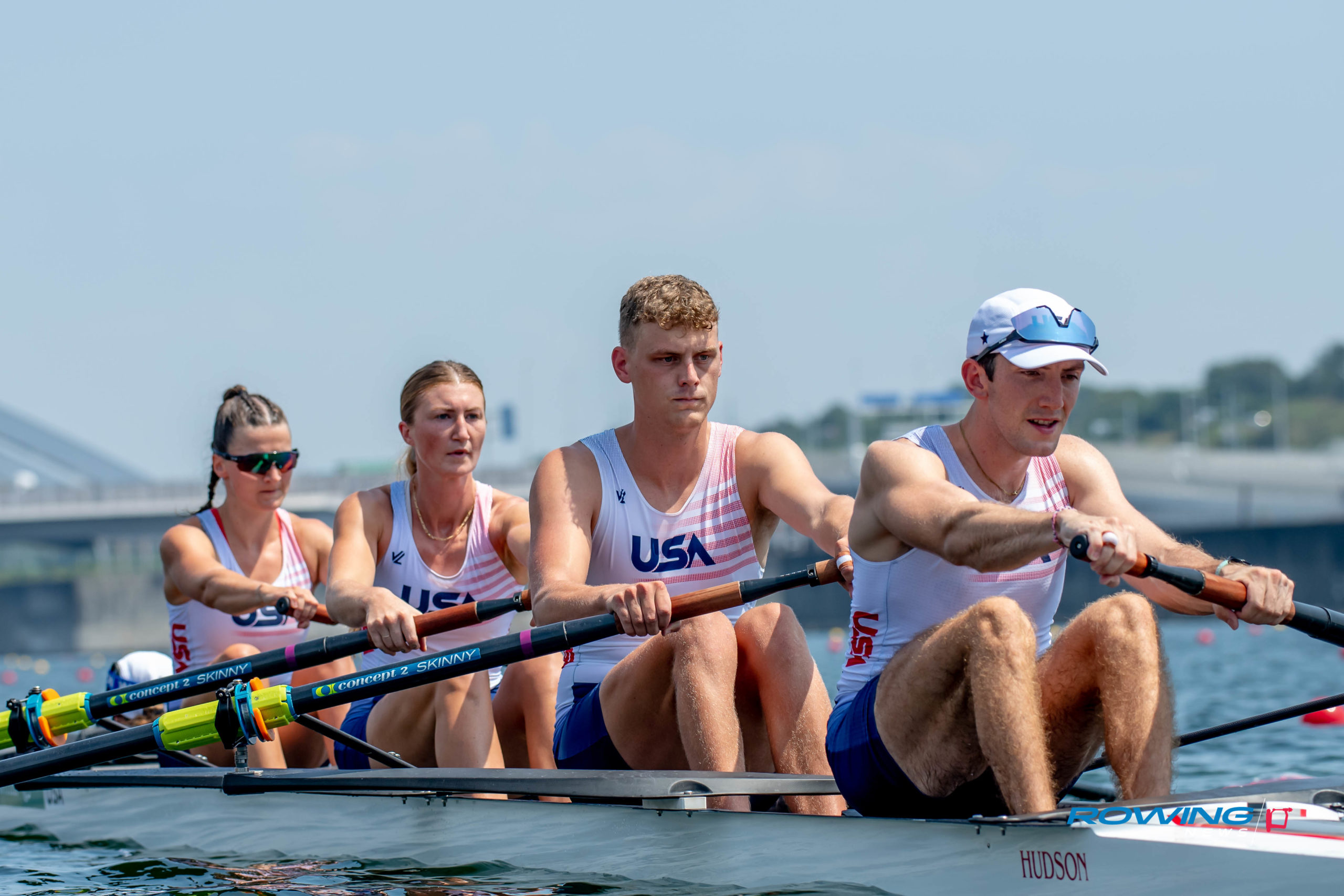
STORY COURTESY USROWING | PHOTO BY ED MORAN

USRowing is pleased to announce the 13 athletes who have been invited to the Paris 2024 Paralympic Selection Camp this coming January. The camp will select the athletes who will represent the U.S. in the PR3 mixed double sculls and PR3 mixed four with coxswain at the Paris 2024 Paralympic Games August 31-September 1 in Paris, France.

The U.S. won silver medals in both PR3 events at the 2023 World Rowing Championships in Belgrade, Serbia, qualifying both boats for the Paralympic Games. The PR3 mixed four with coxswain boatmates of Ben Washburne, Saige Harper, Alex Flynn, Skylar Dahl, and coxswain Emelie Eldracher are all back with eyes on making the Paris boat, as are PR3 mixed double sculls silver medalists Todd Vogt and Gemma Wollenschlaeger.

The seven 2023 team members will be joined by three Paralympic veterans and three rookies looking to make their first national team. Dani Hansen, a two-time Paralympic silver medalist in the four, is looking to make her third Paralympic Games, while her fellow Tokyo 2020 silver medalists, Charley Nordin and John Tanguay, are looking to make their second Paralympic team.

“This will be one of the most competitive PR3 camps we have put together in some time,” said Ellen Minzner, Director of Para High Performance. “Our focus has been on recruiting and retaining top talent, and I think this camp reflects that. I am encouraged by what this could mean for us not only this year, but for the lead up to LA 2028.”

The camp will take place January 4-16 at Nathan Benderson Park in Sarasota, Fla.

Selection Camp Invites
Max Allemeier (Marietta, Ga./Atlanta Junior Rowing Association)
Skylar Dahl (Minneapolis, Minn./University of Virginia)

Emelie Eldracher (Andover, Mass./Massachusetts Institute of Technology)

Alex Flynn (Danvers, Mass./Tufts University)

Dani Hansen (Patterson, Calif./University of Washington)

Saige Harper (Easthampton, Mass./Sacred Heart University)

Ava Liebmann (Rye, N.Y./Duke University)

Sarah Menefee (Austin, Texas/University of Tulsa)

Charley Nordin (Alameda, Calif./Gonzaga University)

John Tanguay (Pennington, N.J./Columbia University)

Todd Vogt (Rochester, N.Y./University of Buffalo/Portland Boat Club)

Ben Washburne (Madison, Conn./Williams College)

Gemma Wollenschlaeger (St. Augustine Beach, Fla./Temple University)

Coaches
Tom Siddall, PR3 Mixed Four with Coxswain

Andrea Thies, PR3 Mixed Double Sculls

San Diego Crew Classic, RegattaCentral Announce Partnership

STORY COURTESY REGATTACENTRAL | PHOTO COURTESY SDCC 

The San Diego Crew Classic has extended its partnership with RegattaCentral, the leading online solutions provider for the rowing community. For the next five years, RegattaCentral will remain the Official Registrar for the event. For almost 20 years, this partnership has played a crucial role in the evolution of one of the nation’s premier rowing events while meeting the rowing community’s changing needs by offering innovative tools for regattas and their participants.

The origins of the San Diego Crew Classic trace back to the early 1970s when a group of dedicated individuals envisioned a regatta that would not only showcase the athleticism of rowers but also celebrate the beauty of the sport. In 1973, the inaugural Crew Classic took place on Mission Bay, with a handful of collegiate crews participating in what would soon become a hallmark event for the rowing community. Over the years, it has grown to become a premier event that includes masters and youth categories, attracting top crews from across the nation and around the world.

Mark Rose, the President of the San Diego Crew Classic, expressed his enthusiasm for the partnership’s renewal, stating, “We at the Crew Classic are excited to continue our long-term partnership with RegattaCentral. Their product, experienced and helpful staff, and commitment to service and support make them a great teammate. We look forward to working together to make the Crew Classic even better.”

Steve Lopez, the founder of RegattaCentral, shares Rose’s excitement for the partnership’s future. “We are delighted to extend our partnership with the prestigious San Diego Crew Classic for another five years,” Steve said. “The Crew Classic is renowned for its excellence in rowing events, consistently setting high standards in numerous aspects. At RegattaCentral, we are thrilled to reaffirm our commitment to delivering the exceptional services and innovative solutions that the Crew Classic has come to depend on, and we are excited to continue working closely with them to achieve this.”

As we celebrate this remarkable milestone, we eagerly anticipate the future, committed to continuing our shared journey of innovation and pushing the boundaries of what is possible for regattas.

December 2023 Magazine

RowingNewsDec.2023

Back Where You Began

BY VOLKER NOLTE | PHOTO BY TOM DILS

You are working for months to improve your performance, and the last ergometer test was encouraging since you achieved a personal best. You feel confident that with continuous effort more improvement will keep coming.

But then a bike accident, a move to a new home, or too much work forces you to put your training on hold. When you resume training, you realize that your performance is far from what it once was. In fact, you seem be back where you began. Not only is your former training intensity out of reach but also your workouts are shorter so you can recuperate properly.

Welcome to the phenomenon of reversibility, when hard-earned fitness gains vanish once you quit training. Typically, the losses occur in less time than it took to achieve the gains. Through targeted training, your body adapts to increasing loads, which become easier to manage so you can perform at a higher level. Through strength training, for example, you prepare your muscles to generate more force, while endurance training enables you to sustain a load longer and with more ease.

Such adaptations take time to develop, which is why you train carefully over a long period. When you discontinue training, however, the adaptations reverse themselves, along with your enhanced ability. That’s why you should continue training after racing season, preferably targeted training with specific goals in mind.

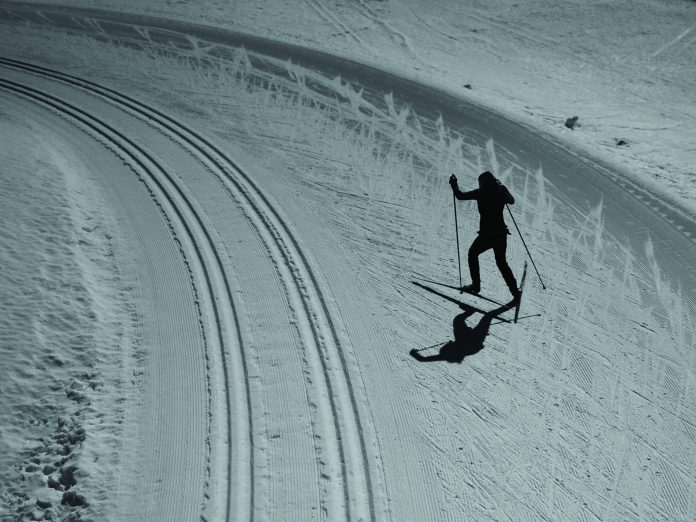
Every serious rowing manual prescribes year-round-training and advises that you use competition-free periods such as winter to prepare for your next races, even if they’re months away. This is the time for more general training at a lower intensity and for a longer time. It’s a chance to try other modes of physical exertion, such as running, bicycling, and cross-country skiing, and to tune up your body by lifting weights and performing balance and flexibility exercises. For mental and physical refreshment, you can play games such as pickleball, volleyball, and soccer, which are valuable especially for young athletes and masters rowers.

All this off-season activity will help you continue to perform better, avoid injury, and stay in the sport longer.   

Sechser, Koszyk Crowned ‘Head of the Charles’

STAFF REPORTS | PHOTO BY LISA WORTHY

Michelle Sechser and Sorin Koszyk are each “Head of the Charles,” the traditional title for the sculler who covers a river course fastest in a time trial-style “head” race.

Both Sechser and Koszyk, who each were part of qualifying U.S. doubles for the Olympics at September’s World Rowing Championships, are lightweights (formerly, in Koszyk’s case), who beat formidable fields, including current Olympic champion Emma Twigg in the women’s field, at the world’s largest three-day rowing regatta.

USRowing National Team entries won both the men’s and women’s championship-eight events, ahead of top college crews Yale, Stanford, Michigan, Virginia, and Brown in the women’s event. Harvard, Princeton, Yale, Northeastern, Brown, Washington, Dartmouth, and Penn all finished in the top 10 of the men’s event.

There were fewer colleges in the women’s top 10 because of how deep and fast the USRowing women are. Having qualified for every sweep event as well as the single and both doubles for the Olympics, the U.S. women raced what were essentially two rowers’ eights and a scullers’ eight, with the sweep rowers finishing one-two with less than a quarter-second between them, and the scullers coming in sixth.

With 90 entries, the women’s youth-eights event at the Charles is the greatest collection of American junior rowing outside of June’s USRowing Youth National Championships. As in Sarasota, southwestern Connecticut crews topped the results, with RowAmerica Rye taking first and third places, Greenwich Crew second, and Saugatuck third. On the boys’ side, St, Paul’s School of London beat second-place Saugatuck and third-place Greenwich by over 20 seconds.

Koszyk didn’t just win; he shattered the course record (previously set by lightweight Andrew Campbell in 2014) by 14 seconds and picked up $10,000 in prize money, a new feature of the regatta. The Charles continues to evolve from its roots as a fun training diversion brought to Cambridge and Boston by Englishman Ernie Arlett, who was Northeastern’s first head coach and in 1964 established the Huskies’ formidable varsity-rowing program.

Sechser, who won back-to-back silver medals at the last two Worlds with different partners in the lightweight double, upset defending Head of the Charles Twigg as well as U.S. National Team openweight single sculler Kara Kohler. Sechser also won $10,000.

“You have to just fearlessly go up against these people, even though on paper, you know they’re taller, bigger, better, stronger, more experienced, and so it was a ton of fun,” said Sechser after the race. “That’s where the races are won, I think, is the fearlessness.”

Youth Quads Prove Popular at ‘The Hooch’

STAFF REPORTS | PHOTO BY LUKE REYNOLDS

Atlanta’s St. Andrew Rowing Club’s women’s U19 eight finished eight seconds faster than the Cincinnati Juniors to win the 49-entry event at the 2023 Head of the Hooch in early November in Chattanooga. Chicago beat Milwaukee in the boy’s event.

Florida’s Belen Jesuit Crew barely beat the men’s youth U19 coxed four from Washington state’s Sammamish Rowing Association, with St. Louis’s A boat finishing third. Cincinnati Juniors won the womens’ youth event.

Youth quads, with 50 entries each for the men’s and women’s divisions, proved almost as popular as the coxed fours and eights among youth crews, with Indianapolis RC winning the men’s U19 event and the all-girls Founders Rowing Club of Dallas winning the women’s U19 quad.

One of the world’s biggest weekend rowing events, the Hooch drew 2,198 entries (the largest, Head of the Charles, got 2,599 this year). For its first 15 years, the Atlanta Rowing Club held the Head of the Chattahoochee on its namesake river in Roswell, Ga., just north of Atlanta.

As the event grew, first to 200 crews, and then over 500, it needed more space and moved in 1997 to the newly constructed Olympic venue at Lake Lanier. By 2004, the regatta attracted more than 1,000 boats and moved again to the Tennessee River in Chattanooga and became known as the Head of the Hooch, the “Last of the Great Fall Regattas.”

The Importance of a Good Warm-Up

Chiswick, Greater London, UK., 11th October 2020, 2 competitors stretch, warm-up before boating for the Pairs Head of the River Race, Restricted entry and Shortened Course, COVID-19, Barnes Bridge and Dukes Meadows location, [Mandatory Credit: Peter Spurrier/Intersport Images]

BY RICH DAVIS
PHOTO BY PETER SPURRIER

Masters need a little more warm-up time than “less experienced” rowers, but both should perform the same routine.

A good warm-up is particularly important for masters who take to the water before dawn when the day is coldest. And while they may need more time getting loose, the amount they perspire may not be a sufficient marker for the quality of the warm-up.

I used to have my crews shove off from the dock and begin paddling at a low rate before gradually increasing the cadence. They began at 24 strokes per minute for 10 strokes and then raised the stroke by two every 10 strokes until they would hit the rate they needed to hold for the workout.

For crew boats, try starting out with one pair balancing the boat. Many crews also like to begin with the pick drill. Just be sure you are warm and loose before beginning such exercises. The pick drill emphasizes timing and precision, and if you are not rowing well, you are practicing poor rowing.

Your warm-up doesn’t need to take place in the boat, either. Try a few calisthenics on land. Plan your practice time to include a significant warm-up and warm-down. Chocolate milk and carbohydrates in the first 10 minutes after practice will also help speed up your recovery.

Knee and Hand Speed

BY RICH DAVIS
PHOTO BY ED MORAN

During their first few outings, it is not uncommon for novices of any age to smash their knuckles into their knees. Worse than the bruises, however, is what this does to the run of the boat and the timing of the recovery.

Hands should always lead away from the release, with the back following as the arms extend. When the hands are over the knees, the back should be in an upright position, with the arms partially extended and the knees down. The speed at which the hands move to the knees from the catch sets the speed of the recovery. As a general rule, the hands should move away from the body as quickly as they came in during the drive. When the hands pass just beyond the knees, the knees begin to rise. Their speed sets the speed of the seat as it slides toward the catch. The combined movements of the hands, arms, and knees should blend together so that the blade travels to the catch at a consistent speed and the boat moves smoothly beneath the rower(s). You can practice recovery timing and knee speed on the ergometer. Just remember to always row the way you would on the water.

Keep these points in mind:

* The hands should be behind the knees at the beginning of the recovery.

* The hands should lead the recovery.

* When the back has just begun to come from the layback position, the arms are still moving toward full extension. 

* When the hands are over knees, the back should be over the hips.

* After the hands pass beyond the knees, they should begin to rise.