

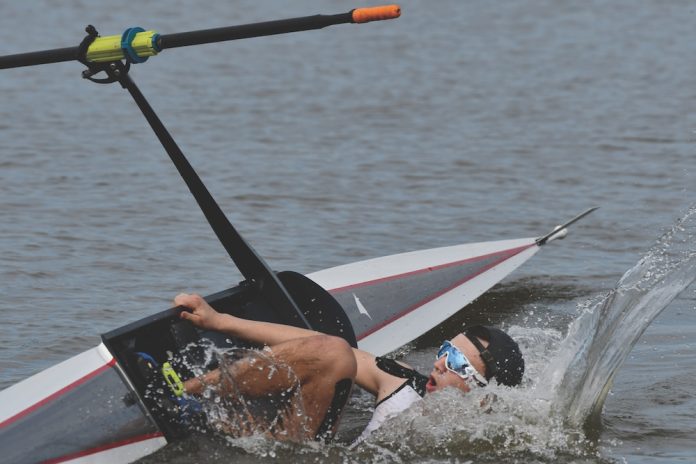
• Stay with the boat: Should any boat swamp or capsize, all rowers and coxswains should stay with the boat and never swim to shore for help. This is the single most important safety advice, and this, alone, can save lives.
To continue reading…
This article is exclusively for Rowing News subscribers. For as little as $5 a month, you can get access to the best quality, independent reporting on all the issues that matter to the North American rowing community.
Already a subscriber? Login
• Safety committee: Every rowing organization should have a safety person or committee responsible for establishing and enforcing safety guidelines specific to the team and location. All members of the club should be familiar with these. Create emergency plans and a site map indicating all bridges, traffic patterns, and rescue access points.
• Weather checks: All coaches should perform a comprehensive weather check before launching, including air and water temperature, wind, water flow rate, fog, strong current locations, debris, looming thunderstorms, and any other relevant local factors. If it’s iffy, do not row.
•Go no-go matrix: Everyone should have the authority to determine safety. Everyone from the assistant coach to the president of the club ought to be authorized to make a safety determination.
• Bow and stern lights: All boats going out at dusk, dawn, or in low visibility should have lights on both the bow and stern. If you’re not sure if it will be dark enough to need them, err on the side of putting them on.
• Life jackets: Consider inflatable life jackets for rowers, coxswains, and coaches, especially in very cold conditions and for less experienced rowers. Life jackets should always be worn by anyone who hasn’t passed a swim test, and all launches should be equipped with enough easily accessible life jackets to rescue at least the largest boat you coach.
• Check hardware: Get rowers and coxswains in the habit of checking all hardware on their seat before each row. They need only to finger-tighten everything to identify any major issues.t
• Log book: A log book always should be used when boats are going out without a coach, which should be limited to experienced rowers and good-weather conditions. All crews should log in and out, with a dedicated club member responsible for keeping regular tabs on the log and following up immediately with any discrepancies.
• Audit: Complete the USRowing Safety Audit Checklist. Have all athletes watch the USRowing safety video every year.
•When in doubt, everyone in a position of responsibility should ask themselves: How will I defend this decision to the families of the people involved, or in court?
